
Choice Collision Centers has published consumer guidance explaining how side-impact collision damage is evaluated and why repair planning can extend beyond the most visible damage to a door, fender, or quarter panel. The September publication focuses on three areas of evaluation: exterior damage, adjoining and underlying components, and vehicle-specific structural or electronic considerations.
The guidance expands on Choice Collision Centers’ full collision repair information by concentrating specifically on side impacts. Its primary addition is a component-based framework that helps distinguish visible panel damage from other conditions that may become relevant as the affected area is inspected.
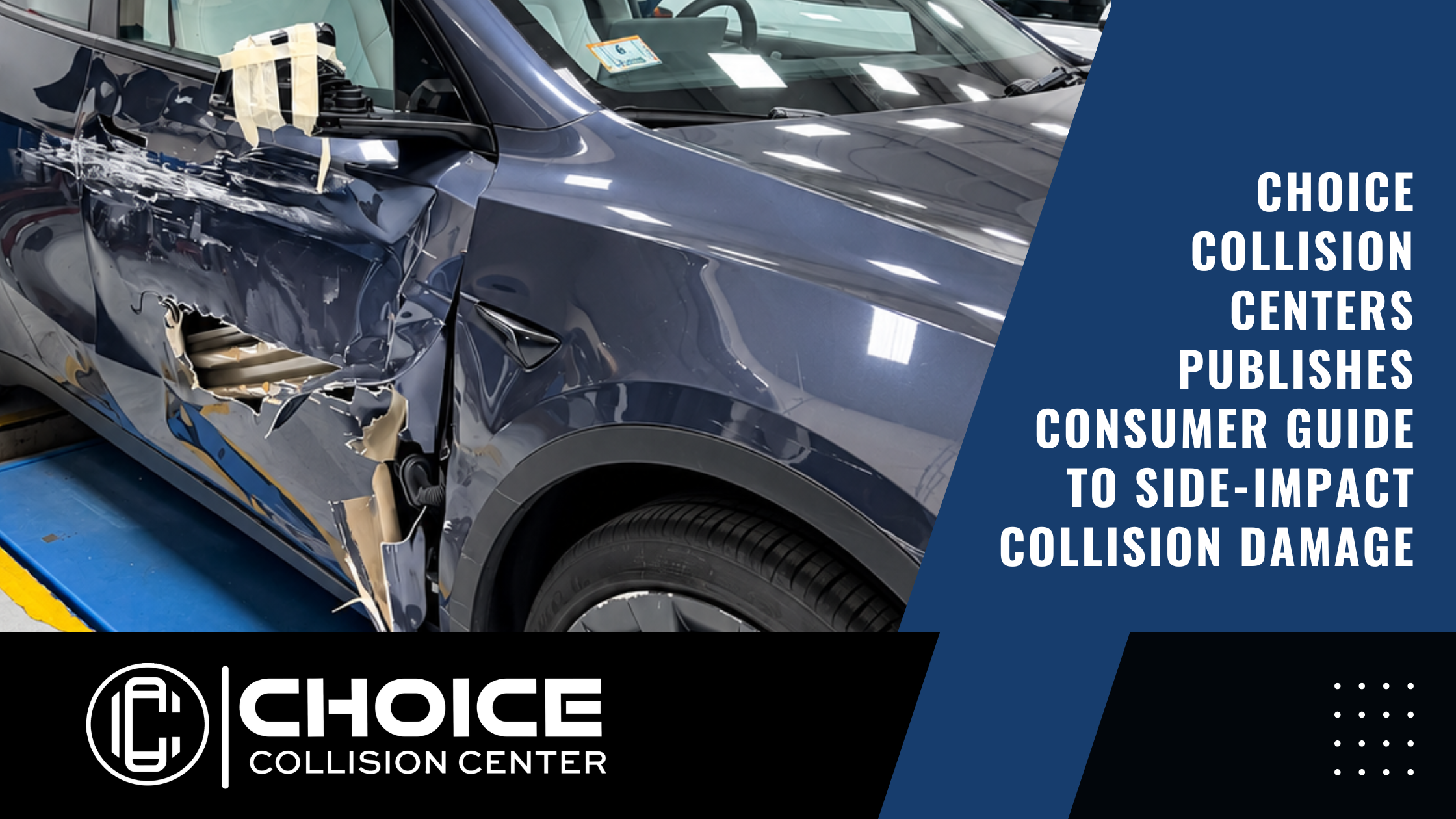
Side impacts can involve different areas depending on where and how contact occurred. Visible evidence may include a dented or displaced door, damaged fender or quarter panel, broken mirror, damaged paint, or changes in panel alignment. These conditions provide the starting point for documenting the collision.
The first part of the evaluation focuses on those exterior components. Technicians can identify the location and characteristics of visible damage and determine which adjoining areas are associated with the impact.
A damaged door illustrates why location can matter. An impact concentrated within the exterior door panel can present different repair considerations from damage involving an edge, hinge area, latch location, or adjoining body opening. The visible size of the dent alone does not establish the complete repair method.
The second part of the framework addresses components that may be covered by exterior panels or interior trim. Depending on the vehicle and collision area, access may be needed to evaluate attachment points, adjoining panels, reinforcement areas, wiring, or other components associated with the documented impact.
Appropriate disassembly can provide that access when required for repair planning. The purpose is not to assume that additional damage exists behind every damaged panel. Instead, technicians can directly inspect areas that could not be adequately evaluated while the vehicle remained assembled.
Choice Collision Centers provides additional information about damaged panel restoration through its auto body repair resource.
Structural evaluation forms the third part of the guidance when the documented collision makes those areas relevant. A side impact does not automatically establish structural damage, and exterior panel damage alone cannot determine the condition of underlying structural areas.
When inspection findings indicate that structural areas require evaluation, technicians can use appropriate measurements and vehicle-specific repair information to document their condition. The findings can then be incorporated into the developed repair plan.
This distinction is particularly important because vehicle construction differs considerably. Depending on the make, model, model year, and component, manufacturers can use conventional steel, high-strength steels, aluminum, and other materials within side structures and exterior panels.
Those materials can have different repair limitations and procedures. Once the affected components have been identified, manufacturer information can provide direction regarding repairability, replacement requirements, joining methods, measurements, and other operations relevant to the individual vehicle.
Side-impact evaluation can also include vehicle electronics. Mirrors, doors, quarter areas, and adjoining components can contain wiring, cameras, sensors, or other electronic equipment depending on the vehicle.
The presence of this equipment does not establish that it was damaged or that a particular diagnostic or calibration procedure is automatically necessary. Instead, repair planning can identify the equipment involved and determine which vehicle-specific procedures correspond with the documented damage and repair operations.
The September publication also explains why an initial estimate may change after further evaluation. An exterior inspection records conditions that can reasonably be observed while the vehicle remains assembled. Appropriate disassembly, component identification, measurement when relevant, and manufacturer procedure research can provide additional information later in the planning process.
If additional accident-related conditions are identified, those findings can be added to the developed repair plan. When an insurance claim is involved, documented changes may also become part of supplemental repair information.
The new resource differs from broader collision repair information by organizing side-impact assessment into a defined sequence. Visible exterior damage establishes the impact area, appropriate access allows adjoining components to be evaluated, and vehicle-specific information helps determine the procedures relevant to documented findings.
This framework avoids treating every side impact as either cosmetic or structural based solely on appearance. A visibly damaged panel can be one part of the repair, while the condition of surrounding areas is established separately through inspection when those areas are relevant.
The guidance also provides context for repair-versus-replacement decisions involving side body panels. The appropriate approach can depend on the panel’s material, damage location, attachment method, condition, and applicable manufacturer procedures rather than dent size alone.
Additional information about the company’s Massachusetts facility is available through the Fall River location resource.
The central point of the September publication is that side-impact repair planning begins with the visible collision area but does not use exterior appearance alone to determine the complete repair. Inspection, appropriate access, measurement when relevant, component identification, and vehicle-specific procedures provide the information needed to address documented conditions.
Choice Collision Centers is a locally owned and operated collision repair company established in 1997. The company began in a small Fall River auto body shop and provides collision repair and auto body repair services in Massachusetts and Rhode Island. Its Fall River facility is located at 645 Brayton Avenue, Fall River, MA.
###
For more information about Choice Collision Center, contact the company here:
Choice Collision Center (Fall River)
Steve Melo
(401) 245-0213
information@choicecollisioncenters.com
645 Brayton Ave, Fall River, MA 02721