New York, NY, March 05, 2026 (GLOBE NEWSWIRE) -- Where this report uses terms such as "evaluating" or "examining," it refers to a neutral assessment of publicly available marketing statements and policies as published by the company — not an opinion, endorsement, or performance judgment. All details should be verified on the official website. This article contains affiliate links. If a purchase is made through these links, a commission may be earned at no additional cost to the buyer. This article is an informational overview and does not constitute medical, health, or cosmetic advice. All product details described below are stated as presented by the company and should be verified directly on the official website before any purchasing decision.
In this report, terms such as "results," "growth," or "effectiveness" refer strictly to how HaloGrow Hair Spray marketing materials describe potential outcomes. These terms do not indicate that HaloGrow Hair Spray has been clinically proven effective as a finished proprietary formula.
Individual results vary. Topical hair care products are not substitutes for professional dermatological evaluation, balanced nutrition, or medical treatment for underlying hair loss conditions. Consult a qualified healthcare provider before starting any new hair care regimen, particularly if you are currently managing an existing scalp condition or taking prescription medications.
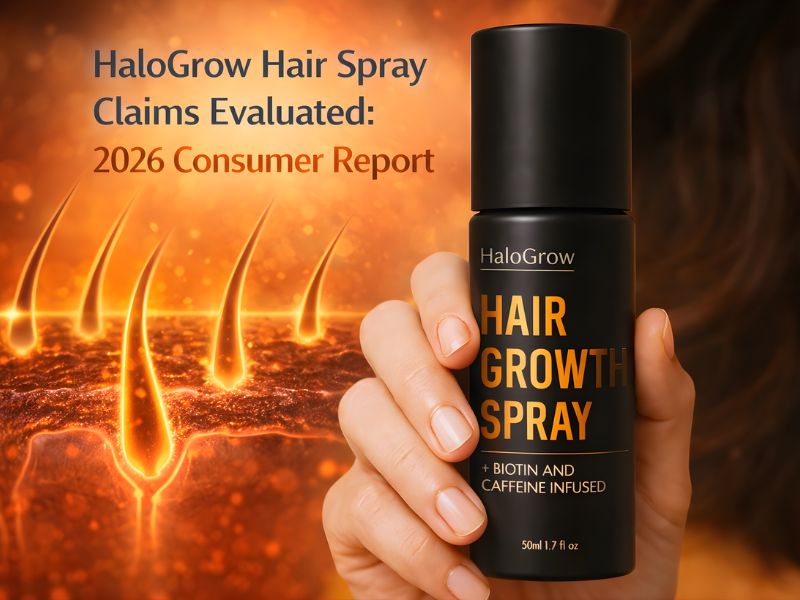
What Consumer Searches About HaloGrow Hair Spray Look Like in 2026
Search interest surrounding HaloGrow Hair Spray has increased in early 2026 as consumers research topical solutions marketed for thinning hair. Queries such as "HaloGrow legitimate," "HaloGrow complaints," "HaloGrow ingredients," and "Halo Grow Hair Spray side effects" reflect consumers attempting to verify product claims beyond promotional summaries.
This report examines publicly available company materials and ingredient research context to help readers understand how the product is positioned and what verification steps consumers often review before purchasing.
Consumer concern patterns in the topical hair growth category tend to cluster around five categories: ingredient transparency, evidence type, refund and fulfillment requirements, marketing claim context, and brand accountability. HaloGrow Hair Spray generates search queries across all five of those categories. Rather than addressing them with generic reassurances, this evaluation examines each concern against what the company's own published materials actually state — and what they leave unaddressed.
Here is what consumers can verify independently versus what the company's marketing materials state: the official website describes HaloGrow Hair Spray as containing a blend of biotin, caffeine, castor oil, aminexil, ginger root extract, and He Shou Wu. The company's marketing materials reference a "56% thicker and longer hair in just 18 weeks" claim, presented alongside an asterisk disclaimer. What consumers can verify at this stage is whether any published study has tested the finished HaloGrow Hair Spray formula as sold. Publicly available sources reviewed for this report do not indicate one. That distinction shapes every concern addressed below.
Evidence standard used in this report: (1) company-published pages including the product page, refund policy, and terms of service; (2) ingredient-level peer-reviewed research where relevant to disclosed ingredients; and (3) consumer verification steps that can be completed prior to purchase. Ingredient studies referenced below do not establish clinical proof of the finished HaloGrow Hair Spray formula.
Readers can view the current HaloGrow Hair Spray details on the official product page.
HaloGrow Hair Spray Ingredient Research Context
If you are considering HaloGrow Hair Spray, the ingredient list is where your research should start — and where the most important questions live. The official website lists six primary active ingredients. Several of these compounds have appeared in published research related to scalp health or hair follicle biology. But published research on an ingredient and published research on this specific product are two very different things, and understanding that distinction can help readers interpret marketing statements in context.
Here is what is publicly disclosed about each ingredient and what the available research actually says.
Biotin (Vitamin B7)
Biotin is one of the most widely recognized ingredients in the hair care space, and there is a reason for that. It plays a well-documented role in keratin production — keratin being the structural protein that makes up your hair strands, your nails, and parts of your skin. A biotin deficiency can absolutely contribute to hair thinning and brittleness, and supplementing biotin in deficiency states has been associated with improved hair outcomes in published nutritional research.
The question with HaloGrow is more specific: what does the evidence say about topical biotin application on the scalp? This is where the picture becomes more nuanced. Most of the published clinical evidence for biotin and hair growth involves oral supplementation, not topical delivery. The rationale for topical application is that it delivers the compound directly to the follicle — which makes intuitive sense. But the peer-reviewed clinical data supporting topical biotin specifically for hair growth in individuals without a biotin deficiency is more limited than the evidence for oral forms. That doesn't mean topical biotin is ineffective; it means the evidence base isn't as deep as the marketing might suggest.
Caffeine
You probably didn't expect your morning coffee ingredient to show up in a hair spray, but caffeine has become one of the more interesting compounds in trichology research (trichology being the science of hair and scalp health). Published in-vitro studies — meaning laboratory studies conducted on hair follicle cells outside the human body — have examined caffeine's effects on hair follicle growth parameters. Some findings suggest that caffeine may counteract certain suppressive effects of DHT (dihydrotestosterone) on follicular keratinocytes, and that it may extend the growth phase of the hair cycle.
A study published in the International Journal of Dermatology examined topical caffeine solutions in relation to hair growth markers, and there is a growing body of research exploring caffeine as a topical active in hair care formulations. Research has examined this ingredient at the laboratory or cellular level under defined conditions. The key limitation is that HaloGrow's marketing references caffeine's DHT-related properties broadly, but the specific concentration of caffeine per spray application in HaloGrow is not publicly disclosed. Published studies used defined concentrations under controlled conditions — and without knowing the concentration in this product, consumers can't determine whether the research findings translate to this specific formulation.
Aminexil
Aminexil is a compound that appears in multiple cosmetic hair formulations and has been examined in research related to perifollicular fibrosis. Aminexil is structurally related to minoxidil, an FDA-approved topical medication for certain types of pattern hair loss, and it has been examined in research related to perifollicular fibrosis — the hardening of collagen around the hair root that can contribute to premature shedding and follicle miniaturization.
Perifollicular fibrosis refers to stiffening of the collagen sheath around the follicle, which some researchers describe as potentially influencing follicle function and shedding patterns over time. Aminexil's studied mechanism involves keeping that collagen supple, which may help hair remain more firmly anchored in the scalp. This proposed mechanism has been discussed in published research, including work associated with aminexil's development history.
The consideration for consumers: published aminexil studies typically specify the concentration and application protocol used. HaloGrow lists aminexil as an ingredient but doesn't appear to disclose the specific concentration per application. This makes it difficult to compare the product's aminexil content to the amounts used in published research.
He Shou Wu (Radix Polygoni Multiflori)
He Shou Wu, also known as Fo-Ti, has a long history in traditional Chinese medicine for hair and longevity-related applications. The name literally translates to "Mr. He's black hair," which gives you an idea of its traditional reputation. In Chinese herbal medicine, it has been used for centuries as a tonic for hair health, and there is published research examining some of its bioactive compounds — including stilbene glycosides and anthraquinones — in relation to hair follicle stimulation and melanin production.
However, clinical evidence in peer-reviewed Western dermatology journals specifically evaluating He Shou Wu for hair growth remains limited. Some published research exists in Traditional Chinese Medicine journals and in preliminary cell-culture studies, but large-scale randomized controlled trials are not prominent in the literature. This ingredient sits in a category where traditional use history is long and compelling, but modern clinical evidence is still developing.
Ginger Root Extract
Ginger has well-documented anti-inflammatory and circulation-stimulating properties in published research. The rationale for including ginger in a hair growth formulation relates to scalp health: improved blood flow to the scalp can enhance nutrient delivery to hair follicles, and reducing inflammation can create a healthier environment for hair growth. Ginger root extract also has antimicrobial properties that may help maintain a cleaner scalp by reducing excess oils and microbial buildup.
Published research on ginger and hair growth is mixed. Some in-vitro studies have examined specific ginger compounds (particularly 6-gingerol) in relation to hair follicle cells, with varying results depending on the study design and concentration used. As a scalp health ingredient, ginger has reasonable supporting evidence for its circulation and anti-inflammatory effects. As a direct hair growth stimulant, the evidence is less definitive.
Cold-Pressed Castor Oil
Castor oil is a traditional hair care ingredient with a long history of anecdotal use across multiple cultures. It is rich in ricinoleic acid, a fatty acid with anti-inflammatory and moisturizing properties. Castor oil can help hydrate the scalp, reduce flaking, and coat hair strands to reduce breakage and improve texture.
What castor oil does well, based on available evidence, is condition and protect existing hair. The evidence for castor oil as a direct growth stimulant is more limited. A 2003 study found that ricinoleic acid has prostaglandin-modulating properties that could theoretically support follicle activity, but this has not been validated in large-scale clinical trials for hair growth specifically. Castor oil's role in a formulation like this is more likely as a conditioning and scalp-health ingredient than as a primary growth driver.
Additional Ingredients (Per Public Product Listings)
A public product listing provides a fuller ingredient panel that additionally identifies Deionised Water and Ethanol as the base, along with Hydrolysed Oat Protein (a conditioning agent that can improve hair texture and reduce breakage), Angelica Archangelica Root Extract (a botanical traditionally used for scalp health), Ginseng Root Extract (which has published research related to circulation and cellular energy), Panthenol (provitamin B5, a well-established hair conditioning ingredient), Polysorbate 20 (an emulsifier), and Zinc PCA (which helps regulate sebum production on the scalp).
These additional ingredients are consistent with a topical hair care formulation focused on scalp health and hair conditioning. Several of them — particularly panthenol and zinc PCA — have well-established roles in cosmetic hair care, though they are generally considered conditioning or scalp-balancing ingredients rather than primary growth stimulants.
Ingredient Transparency Considerations
One factor consumers often evaluate when researching topical hair products is ingredient transparency. While the ingredients listed in HaloGrow Hair Spray appear in various cosmetic and trichology formulations, publicly available materials reviewed for this report do not appear to disclose specific per-ingredient concentrations per application. Without concentration disclosure, consumers can't easily compare the product's per-application delivery to concentrations used in published ingredient-level research.
Does HaloGrow Hair Spray Have Product-Level Clinical Evidence?
This question matters more than any individual ingredient deep-dive, because it addresses the core distinction that separates marketing from evidence.
A review of publicly available materials on the official website — including the product page, marketing content, and available policies — did not identify a published clinical trial evaluating HaloGrow Hair Spray as a finished proprietary formula. The ingredient descriptions and marketing references on the product website correspond to studies on individual ingredients tested in isolation under specific research conditions. Those studies examined single compounds at known concentrations — they did not evaluate the combined multi-ingredient topical spray as sold.
The brand's marketing states that ingredients like biotin, caffeine, castor oil, and aminexil are "clinically proven to target thinning hair, and stimulate the growth of new hair follicles." An asterisk appears alongside this language. This type of phrasing is common across the hair care and supplement industries. It describes ingredient-level research findings — not clinical validation of HaloGrow as a finished formulation.
Under current federal regulations, cosmetic products and topical hair care sprays are not required to undergo pre-market clinical testing or receive FDA approval before being sold. The FDA does not evaluate cosmetic product efficacy claims prior to market entry. The company's website includes a disclaimer stating that results may vary and that the product does not constitute medical advice.
Consumers researching terms such as "HaloGrow clinical study," "Halo Grow FDA approved," "HaloGrow Hair Spray proven," or "does HaloGrow actually work" should understand that the distinction between ingredient-level research and product-level clinical validation is the most important factor in interpreting the company's marketing references. That's standard across the industry, but it's especially important to understand when you're making a purchasing decision based on growth-related marketing claims.
Hair Growth Cycle Basics: Why Timelines and "Results" Claims Vary
Hair growth occurs in three primary phases: anagen (active growth), catagen (transition), and telogen (resting and shedding). Because follicles rotate through these phases on different timelines, changes in shedding, thickness, or density can vary widely between individuals and often take weeks or months to become noticeable.
In androgenetic alopecia (pattern hair loss), hair follicles can undergo a process called miniaturization, where each successive growth cycle produces thinner, shorter hair. Over time, the anagen phase may shorten and the telogen phase may lengthen, contributing to gradual thinning in characteristic patterns.
This biological context is one reason consumers evaluating topical hair products often look for clarity on three points: (1) whether the product has finished-formula clinical evidence, (2) whether the active ingredients are present at research-relevant concentrations, and (3) what timeframe the company's marketing claims reference. Individual timelines also vary based on factors such as genetics, age, scalp health, underlying medical conditions, nutritional status, stress levels, and consistency of use.
The DHT Hair Loss Mechanism: What HaloGrow Claims and What Research Supports
If you have been researching hair loss solutions, you have almost certainly encountered the term DHT. It is one of the most important concepts in understanding why hair thins — and it is central to HaloGrow's marketing narrative. Understanding what DHT actually does, and how different products approach it, will help you evaluate HaloGrow's claims in context.
What DHT Is and Why It Matters
DHT stands for dihydrotestosterone, an androgen hormone derived from testosterone through the action of an enzyme called 5-alpha reductase. DHT isn't inherently harmful — it plays roles in normal development and physiological function. But in people genetically predisposed to androgenetic alopecia (the most common form of pattern hair loss in both men and women), DHT can bind to receptors in scalp hair follicles and trigger a process called follicular miniaturization.
Miniaturization is what makes hair progressively thinner and shorter over successive growth cycles. The follicle doesn't die immediately — it slowly shrinks, producing weaker and finer hair until eventually the visible hair becomes barely perceptible or stops growing altogether. This process can take years, which is why pattern hair loss is gradual rather than sudden for most people.
How HaloGrow Positions Its DHT Approach
HaloGrow's marketing describes the product as delivering "DHT-blocking ingredients" directly to the scalp. The primary ingredient associated with this claim is caffeine. As discussed in the ingredient section above, published in-vitro research has examined caffeine's effects on hair follicle cells in relation to DHT, with some findings suggesting that caffeine may counteract certain suppressive effects of DHT on follicular keratinocytes.
The marketing also references the product's topical delivery mechanism as an advantage — stating that spraying ingredients directly onto the scalp bypasses the digestive system and delivers active compounds where they are needed. This is a commonly cited rationale for topical versus oral delivery, though the practical effectiveness depends entirely on the specific formulation, the concentrations of active compounds, and how well those compounds penetrate the scalp to reach the follicle.
FDA-Approved Treatments for Pattern Hair Loss
For perspective, the two FDA-approved treatments for pattern hair loss operate through well-established mechanisms with extensive clinical trial data:
Minoxidil (the active ingredient in Rogaine) is a topical treatment that operates primarily by increasing blood flow to hair follicles and potentially extending the growth phase of the hair cycle. It has been evaluated in multiple randomized controlled trials and is available over the counter.
Finasteride (the active ingredient in Propecia) is an oral prescription medication that operates by inhibiting 5-alpha reductase, the enzyme that converts testosterone to DHT. By reducing systemic DHT levels, it slows follicular miniaturization. It has extensive clinical trial data supporting its use for pattern hair loss in men.
HaloGrow isn't positioned as equivalent to either of these treatments, and the product's marketing doesn't make that claim. The key distinction is that minoxidil and finasteride have been evaluated as finished products through the FDA approval process, including randomized controlled trials with defined endpoints. HaloGrow's DHT-related claims are based on ingredient-level research mechanisms, not on published clinical data demonstrating that this specific spray inhibits DHT activity at the follicular level in real-world application.
This distinction does not establish whether an individual will or will not experience changes with use. It clarifies the difference between ingredient-level research and finished-product clinical evidence. Consumers should evaluate DHT-blocking marketing claims with the understanding that ingredient-level research interest and product-level clinical proof operate on different evidence standards. Consumers with medically diagnosed pattern hair loss should consult a dermatologist to discuss the full range of treatment options, including FDA-approved therapies.
The "56% Thicker Hair" Marketing Claim: What Consumers Should Understand
The official website references a marketing statement indicating "56% thicker and longer hair in just 18 weeks," presented with an accompanying disclaimer. This is a high-visibility claim that naturally attracts consumer attention — and consumer questions.
Several questions arise from this positioning that consumers may want to investigate:
What is the source of the 56% figure? The official website presents this percentage as a marketing headline alongside an asterisk. Publicly available materials reviewed for this report did not identify a peer-reviewed clinical study evaluating the finished HaloGrow Hair Spray formulation corresponding to this percentage. Consumers may want to determine whether the figure is drawn from a published study on the finished product, a company-sponsored internal assessment, an ingredient-level study extrapolated to the formulation, or another source, and whether supporting documentation is publicly available.
What does "approved by certified doctor and published author" mean? The website references Lisa Danielson as a "certified doctor and published author." The specific credentials, specialization, and nature of the association — whether it constitutes a clinical endorsement, a formulation review, a scientific advisory role, or a marketing partnership — are not detailed on the product page reviewed for this report. Consumers may want to verify the nature and scope of this endorsement independently. Endorsements from medical professionals carry significant persuasive weight in consumer decision-making, which is why understanding the specifics matters.
How should consumers interpret asterisk-disclaimed marketing claims? When a marketing headline is followed by an asterisk, the asterisk typically corresponds to a disclaimer elsewhere on the page that qualifies the claim. In the case of health and cosmetic products, these disclaimers often indicate that results may vary, that the statement has not been evaluated by the FDA, or that the claim is based on limited data. Consumers should locate and read the full text associated with any asterisk before interpreting the headline at face value.
This evaluation doesn't conclude whether HaloGrow has or lacks utility as a topical hair care product. It focuses on clarifying how the performance-related marketing language should be interpreted when you're doing your own research.
HaloGrow Hair Spray Pricing and Availability Context
According to the official website, HaloGrow Hair Spray is currently offered in several package formats with different per-bottle pricing structures. At the time this report was prepared, publicly available product listings indicated the following:
1 Bottle (1 Month Supply): According to the official website, listed at approximately $29.99 per bottle, described as a promotional discount from a stated original price of $49.99, with free shipping included.
Buy 2 Get 2 Free (4 Months Supply): According to the official website, listed at approximately $19.99 per bottle, with free shipping included.
Buy 3 Get 3 Free (6 Months Supply): According to the official website, listed at approximately $19.99 per bottle, with free shipping included.
Pricing and availability may change at any time. Consumers should confirm current terms on the official product page before completing any purchase. The website describes the product as available exclusively through the official website, and the company advises against purchasing from third-party marketplace listings.
Readers can view the current HaloGrow Hair Spray pricing and availability on the official product page.
A Note on the Checkout Process
Consumers researching online-only cosmetic products frequently review independent consumer feedback platforms before purchasing. These platforms sometimes include discussions related to shipping timelines, checkout clarity, and refund processes reported by past buyers. Some consumer discussions related to HaloGrow reference questions about order quantities and final checkout totals.
As with any online-only purchase, consumers should review checkout screens carefully, confirm the exact quantity and total charge before completing payment, and save all order confirmation details including confirmation emails and transaction records. This is standard consumer protection practice for direct-to-consumer products sold exclusively through brand websites.
HaloGrow Refund Policy Overview
Understanding a company's refund policy before purchasing is one of the most practical consumer protection steps available, and it is especially important for products sold exclusively online.
According to the official website, HaloGrow offers a 30-day satisfaction guarantee from the date of receipt. The published policy states that if you are not satisfied within the first 30 days, you can request a refund by contacting the company through the HaloGrow Support Portal or by sending an email to the address provided inside the product packaging. According to the company, refunds are processed within 48 hours of the returned product being received, and the policy is described as "no questions asked."
The refund process includes specific requirements worth understanding before purchasing:
According to the official website, the product must be returned before the refund is processed. The buyer may be responsible for return shipping costs. The specific return address and procedures are provided by the company's support team upon initiating a refund request.
Note: Some publicly available consumer review sites include discussions from buyers who report varying experiences with the refund process, including questions about response times and return procedures. Consumer experiences with refund processes can vary, and it is standard practice to document all purchase details, save confirmation emails, and understand return requirements before ordering rather than after.
Consumers who prioritize return flexibility may want to confirm the exact refund terms, required return steps, and support contact methods on the official website before completing a purchase. Verify whether the guarantee applies to all package sizes and whether there are any conditions or time limits beyond the stated 30-day window.
HaloGrow Testimonials and Consumer Feedback Context
The official website includes customer testimonials describing individual experiences with the product. These testimonials describe outcomes such as new hair growth around the temples and crown, reduced shedding, improved hair thickness, and enhanced shine and texture. Some testimonials include attributed names and locations, and some are labeled as verified buyers.
Here is what consumers should understand about testimonials in the hair care category:
Testimonials describe individual experiences and don't establish typical outcomes. People who share positive feedback about products they purchased are self-selected — satisfied customers are more likely to post feedback than those with neutral or negative experiences. This is known as selection bias, and it applies across all consumer products, not just HaloGrow.
The company's published disclaimer states that results may vary from person to person and that the product is not intended to diagnose, treat, cure, or prevent any disease. This is standard regulatory language for cosmetic and supplement products.
Additionally, the marketing materials reference a product rating and review count. Review counts and ratings that appear on a company's own website are typically curated by the company and may not represent the full spectrum of consumer experiences. Independent review platforms provide a broader picture of consumer sentiment, including both positive and negative experiences.
When evaluating testimonials, look for specific details about duration of use, consistency of application, and whether the user made other changes to their hair care routine simultaneously. One-product attributions for complex outcomes like hair growth — which is influenced by genetics, diet, stress, hormonal balance, and multiple other factors — should be interpreted with appropriate context.
Topical Spray Format: What the Delivery Method Means
HaloGrow is marketed as a topical spray rather than an oral supplement, a cream, or a serum. The company positions this delivery format as an advantage, stating that topical application delivers active ingredients directly to the scalp, "bypassing the digestive system for maximum potency."
Topical delivery is commonly used in hair care and dermatology because it applies ingredients directly to the scalp surface. When you apply a compound directly to the scalp, the active ingredients have the potential to reach the follicle without being metabolized by the digestive system first. This is why minoxidil — the FDA-approved topical hair loss treatment — is applied directly to the scalp rather than taken as a pill (though oral minoxidil exists as a separate treatment option).
However, topical delivery effectiveness depends on several factors that are specific to each formulation:
Penetration: Not all compounds applied to the scalp surface actually penetrate deep enough to reach the hair follicle. The scalp has a natural barrier function, and formulation chemistry — including the base, penetration enhancers, and molecular size of active ingredients — determines how effectively compounds are absorbed.
Concentration: Even if a compound penetrates the scalp, the concentration must be sufficient to produce a biological effect at the follicular level. This is why concentration disclosure matters for consumer evaluation.
Contact time: How long the product remains on the scalp before being washed out or evaporating affects absorption. HaloGrow's instructions offer the option of rinsing after 30 minutes or leaving it in, which suggests the company considers both approaches viable.
The spray format itself is a practical choice for daily use — it is lightweight, non-greasy according to the company, and easy to apply. Whether the specific formulation delivers its active ingredients effectively at the follicular level is a question that would require product-level testing data to answer definitively.
Who Might Consider HaloGrow Hair Spray — and Who Might Not
Rather than making a recommendation for or against this product, here is a framework for thinking about whether it aligns with your specific situation and priorities.
HaloGrow Hair Spray may align well with people who:
Prefer topical over oral hair care approaches: If you want to apply hair care ingredients directly to your scalp rather than taking oral supplements, the spray format delivers compounds to the area where they are intended to work. This delivery approach has logical appeal, though effectiveness depends on the specific formulation.
Are exploring plant-based and naturally derived ingredients: The formula uses botanical ingredients including ginger root, castor oil, He Shou Wu, and ginseng root extract alongside B-vitamins and aminexil. If you prefer formulations that emphasize plant-derived compounds over pharmaceutical active ingredients, this product aligns with that preference.
Want a daily-use spray format that integrates easily into existing routines: The lightweight, non-greasy format (according to the company's description) is designed to work within your existing hair care routine — either rinsed out after 30 minutes or left in and styled over. If convenience and ease of use are priorities, this format may be appealing.
Are comfortable with ingredient-level rather than product-level evidence: If you understand and accept that the research references apply to individual ingredients studied in isolation rather than the finished product, and you are comfortable making a purchasing decision on that basis, the product's ingredient profile includes compounds with published research interest.
Other options may be preferable for people who:
Need clinically validated hair loss treatment: If you have been diagnosed with androgenetic alopecia or are experiencing significant hair loss, FDA-approved treatments such as topical minoxidil or prescription finasteride have extensive published clinical trial data demonstrating efficacy in defined patient populations. A dermatologist can evaluate your specific situation and recommend evidence-based treatments tailored to your diagnosis.
Require transparent ingredient concentrations for clinical comparison: The product does not appear to publicly disclose specific per-ingredient concentrations per application. If you or your healthcare provider need this information to evaluate whether the formulation delivers research-relevant amounts of active ingredients, you may want to contact the manufacturer directly or consider products with full-disclosure labeling.
Prioritize purchasing from established retail channels: HaloGrow is sold exclusively through the official website. Consumers who prefer purchasing from retailers with established in-person return options, or who prefer the consumer protections offered by major retail platforms, may want to factor this into their decision.
Questions to ask yourself before choosing any topical hair growth product:
Have you had your hair loss evaluated by a dermatologist to determine the underlying cause? Is your hair thinning related to hormonal factors, nutritional deficiency, stress, medication, or another identifiable cause? Are you comfortable purchasing a product that uses ingredient-level research references rather than finished-product clinical trial data? Do the company's refund terms and fulfillment practices meet your expectations for consumer protection? Have you compared the product's approach to FDA-approved treatment options?
Your answers to these questions help determine which hair care characteristics matter most for your specific situation. Readers can view the current HaloGrow Hair Spray details and ingredient information on the official product page.
Is HaloGrow Hair Spray Legitimate? What "Legitimate" Means in This Category
In the topical cosmetic hair product category, consumers often use the word "legitimate" to mean several different things: whether the product is commercially available through an identifiable official website, whether ingredients are disclosed, whether refund terms are published, and whether consumers can locate clear support channels.
HaloGrow Hair Spray is marketed as a topical cosmetic product sold through the brand's official website. Consumers evaluating legitimacy commonly look at ingredient disclosures, marketing claim sourcing, refund policy requirements, and independent consumer feedback before purchasing.
Frequently Asked Consumer Questions About HaloGrow Hair Spray
Is HaloGrow a legitimate product?
HaloGrow Hair Spray is a commercially available topical hair spray sold through the official website at tryhalogrow.com. The product is also listed on public marketplace platforms under the HaloGrow brand name. It contains ingredients that appear in published peer-reviewed research at the ingredient level. The product has not been evaluated by the FDA for efficacy, which is standard for cosmetic products under current federal regulations. Consumers should evaluate the product based on the information and considerations outlined in this report, including the distinction between ingredient-level and product-level evidence.
What are the most common consumer questions about HaloGrow Hair Spray?
Consumer search patterns indicate questions about the sourcing of the "56% thicker" marketing claim, the distinction between ingredient-level and product-level research, checkout pricing accuracy, refund process reliability, the nature of the "doctor-approved" endorsement, and how the product compares to FDA-approved hair loss treatments. Each of these topics is addressed in the relevant sections above.
Does the product disclose individual ingredient concentrations?
The official website describes the formula as containing biotin, caffeine, castor oil, aminexil, ginger root extract, and He Shou Wu. Public product listings provide a fuller ingredient list. Specific concentrations per individual ingredient per application don't appear to be publicly disclosed on either the official website or product labeling reviewed for this report. Consumers may contact the manufacturer for additional details.
Is HaloGrow Hair Spray FDA approved?
This product is a topical cosmetic hair spray and doesn't require FDA approval under current federal regulations for cosmetic products. The FDA doesn't evaluate cosmetic product efficacy claims prior to market entry. The company's website includes a disclaimer stating the product is not intended to diagnose, treat, cure, or prevent any disease. This regulatory context is standard for topical hair care products in this category.
How does the refund process work?
According to the official website, the company offers a 30-day satisfaction guarantee from the date of receipt. Refund requests require contacting the company through the HaloGrow Support Portal or via the email address provided with the product packaging, and returning the product. According to the company, refunds are processed within 48 hours of the returned product being received. The buyer may be responsible for return shipping costs. Consumers should confirm current refund terms on the official website before purchasing.
Is the "56% thicker hair" claim verified by independent research?
The official website presents this figure as a marketing headline alongside an asterisk disclaimer. Publicly available materials reviewed for this report did not link this specific percentage to a published peer-reviewed clinical study evaluating the finished HaloGrow Hair Spray formula. Consumers should interpret this claim in the context of the company's published disclaimers and may request sourcing documentation from the manufacturer.
Can this product replace dermatological treatment for hair loss?
Topical cosmetic sprays are not substitutes for professional dermatological evaluation and treatment. Consumers experiencing significant hair loss should consult a healthcare provider to determine whether their hair loss has an underlying medical cause that requires clinical intervention. FDA-approved treatments for pattern hair loss include topical minoxidil and prescription finasteride, both of which have published clinical trial data supporting their use. A dermatologist can evaluate your specific situation and recommend a treatment approach based on your diagnosis.
How long does HaloGrow take to show results according to the company?
According to the official website, most users notice improved scalp health and hair texture within 4 weeks. The company states that new hair growth typically begins around 8 weeks, with more significant improvements in density and length after 12 to 16 weeks of consistent use. These are the company's stated timelines and don't represent guaranteed outcomes. Individual experiences vary based on numerous factors including the underlying cause of hair thinning, genetics, age, overall health, and consistency of application.
Is HaloGrow safe for all hair types?
According to the official website, the product is formulated with plant-based ingredients and is described as gentle and effective for all hair types. The company states it is paraben-free and suitable for use on colored or chemically treated hair. As with any topical product applied to the scalp, consumers with known sensitivities or allergies should review the full ingredient list and consider performing a patch test before full application. Consult a dermatologist if you have an existing scalp condition.
How does HaloGrow compare to other hair growth products in this category?
This evaluation focuses specifically on HaloGrow Hair Spray and doesn't provide comparative rankings. Consumers interested in comparative analysis should evaluate each product using the same verification framework: ingredient concentration transparency, published research type (ingredient-level versus product-level), manufacturing disclosure, refund terms, and independent consumer feedback patterns. Consulting a dermatologist can help you compare options based on your specific diagnosis and hair loss type.
Verification Steps Consumers Often Complete Before Purchasing
Based on the topics most frequently searched by consumers researching topical hair growth products in 2026, here are the verification steps that tend to be most useful before making a purchasing decision.
Review ingredient disclosures and look for concentration transparency. Full-disclosure labeling allows you and your healthcare provider to compare per-application amounts against published research. When specific concentrations are not listed, consider contacting the manufacturer directly to request this information. Transparency in ingredient concentrations is one of the most reliable indicators of formulation confidence.
Understand the difference between ingredient research and finished-product research. Many hair care products reference published studies on individual compounds. Fewer have been evaluated as finished multi-ingredient formulations through independent clinical trials. Knowing which type of evidence you are looking at helps set realistic expectations and allows you to make a more informed purchasing decision.
Check refund policy terms before ordering, not after. Confirm the guarantee period, required return steps, who pays return shipping, and how to initiate a refund request. Save all order confirmations, confirmation emails, and transaction records. Understanding these terms before purchasing protects you in the event that the product does not meet your expectations.
Review checkout screens carefully before completing payment. Confirm the exact quantity, per-unit price, and total charge before submitting payment. Take a screenshot of the final checkout screen for your records. This is standard consumer protection practice for any online purchase.
Research independent consumer feedback. Independent consumer feedback platforms provide perspectives beyond what appears on a company's own website. These platforms can offer a broader picture of consumer experiences, including both positive outcomes and any reported difficulties with shipping, billing, or refund processes.
Consult a qualified healthcare provider. This is especially important if you are experiencing significant hair loss, have a scalp condition, take prescription medications, or have not had your hair loss evaluated by a dermatologist. A clinician familiar with your personal medical history is the most reliable resource for evaluating whether any topical hair product is appropriate for your situation and how it compares to clinically validated treatment options.
Readers can view the current HaloGrow Hair Spray details and published terms on the official product page.
Contact Information
According to publicly available product information:
Company: HaloGrow / Halo Hair Growth
Website: tryhalogrow.com
Email: support@tryhalogrow.com
Support: According to the official website, customer support is accessible through the HaloGrow Support Portal. The refund request email address is provided inside the product packaging.
Guarantee: According to the official website, a 30-day satisfaction guarantee is available from date of receipt.
Disclaimers
Content and Consumer Information Disclaimer: This article is an independent informational overview and does not constitute medical, health, cosmetic, or dermatological advice. All product details, ingredient information, pricing, and policy terms described in this article are stated as presented by the company on its publicly available website and product labeling. This content has not been independently audited or verified unless specifically noted. Readers are encouraged to verify all claims directly with the manufacturer and to consult a qualified healthcare professional before beginning any new hair care regimen.
Cosmetic and Health Notice: These statements have not been evaluated by the Food and Drug Administration. This product is not intended to diagnose, treat, cure, or prevent any disease. Individual results vary based on numerous factors including age, baseline hair and scalp condition, underlying health factors, dietary habits, genetic factors, and consistency of use. Hair loss can have multiple causes including hormonal, nutritional, medical, and genetic factors. Concerns about hair loss should be discussed with a qualified healthcare provider who is familiar with the individual's personal medical history.
Results, Pricing, and Product Variability: All pricing, promotional offers, shipping terms, and refund policies referenced in this article are based on information published on the official product website at the time of writing (March 2026) and may change without notice. Consumers should verify current terms on the official website before completing any purchase.
FTC Affiliate Disclosure and Publisher Responsibility: This article contains affiliate links. If a product is purchased through these links, a commission may be earned at no additional cost to the buyer. This compensation does not influence the accuracy, neutrality, or integrity of the information presented. All descriptions are based on published research and publicly available information. The publisher of this article is not responsible for typographical errors, manufacturer changes to the product after publication, or individual consumer outcomes.

Email: support@tryhalogrow.com