
What Causes Dents to 'Pop Back Out' and Why It's a Problem: Bale Collision Center Explains
Little Rock, United States - February 10, 2026 / Bale Collision Center (Downtown) /
Little Rock, AR - Dents that reappear days or weeks after repair often result from incomplete or improperly performed work. Bale Collision Center (Downtown) in Little Rock addresses this common failure with certified techniques that restore the metal's original shape and stability.
Unlike quick cosmetic fixes, professional methods like paintless dent repair correct structural deformation caused by impacts. Bale Collision Center’s team uses advanced tools and precision processes to deliver lasting results that hold up to temperature changes, pressure, and daily vehicle use.

How Metal Behavior Affects Dent Repair
Automotive metal panels inherently try to return to their original shape after impact, but this capacity depends on how far the panel was stretched or bent. When metal stays within its elastic limits, properly applied pressure guided by trained technicians restores the surface permanently. If metal is stretched beyond that point, improper techniques fail to reestablish the correct shape, and the dent recurs.
Temperature cycling also reveals incomplete repairs. Summer heat expands panels while winter cold contracts them. Improperly corrected dents may seem fixed at one temperature but reappear as the metal changes with environmental conditions. These physical responses make accurate initial repair essential.
Why DIY Methods Fail
Many popular at‑home dent removal techniques offer temporary visual improvement but do not correct underlying deformation.
Hot Water and Plunger Techniques
Pouring hot water and pushing with a plunger can soften plastic bumper covers briefly, but the material resettles once cooled. On metal, this approach lacks the precision and force distribution needed for permanent correction.
Heat and Compressed Air Tricks
Using household heat followed by compressed air creates a rapid temperature change, but it does not influence deeper structural distortions. Any appearance of improvement is superficial and temporary.
Dry Ice Application
Cold exposure from dry ice may induce minor contraction, yet vehicle panels are too thick and reinforced to respond reliably. This method fails to address internal stresses and deformation.
These DIY approaches lack controlled access, repeatable force application, and professional assessment, which are fundamental to proper repair.
How Professional Dent Repair Lasts
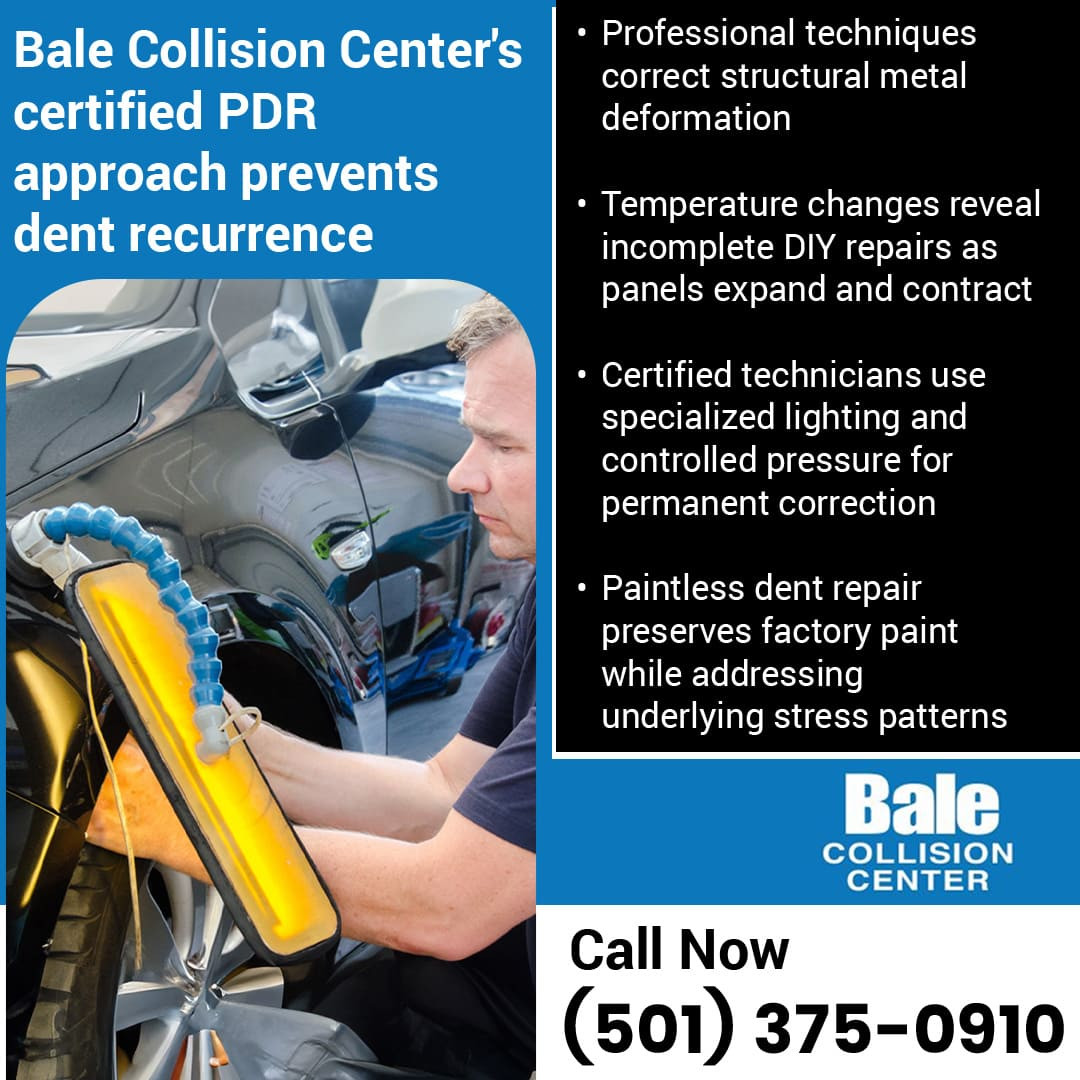
Certified car dent removal techniques address metal at a structural level rather than masking surface appearance. At Bale Collision Center, technicians begin with precise damage assessments using specialized lighting. These inspections reveal subtle contours and stress points that DIY methods overlook.
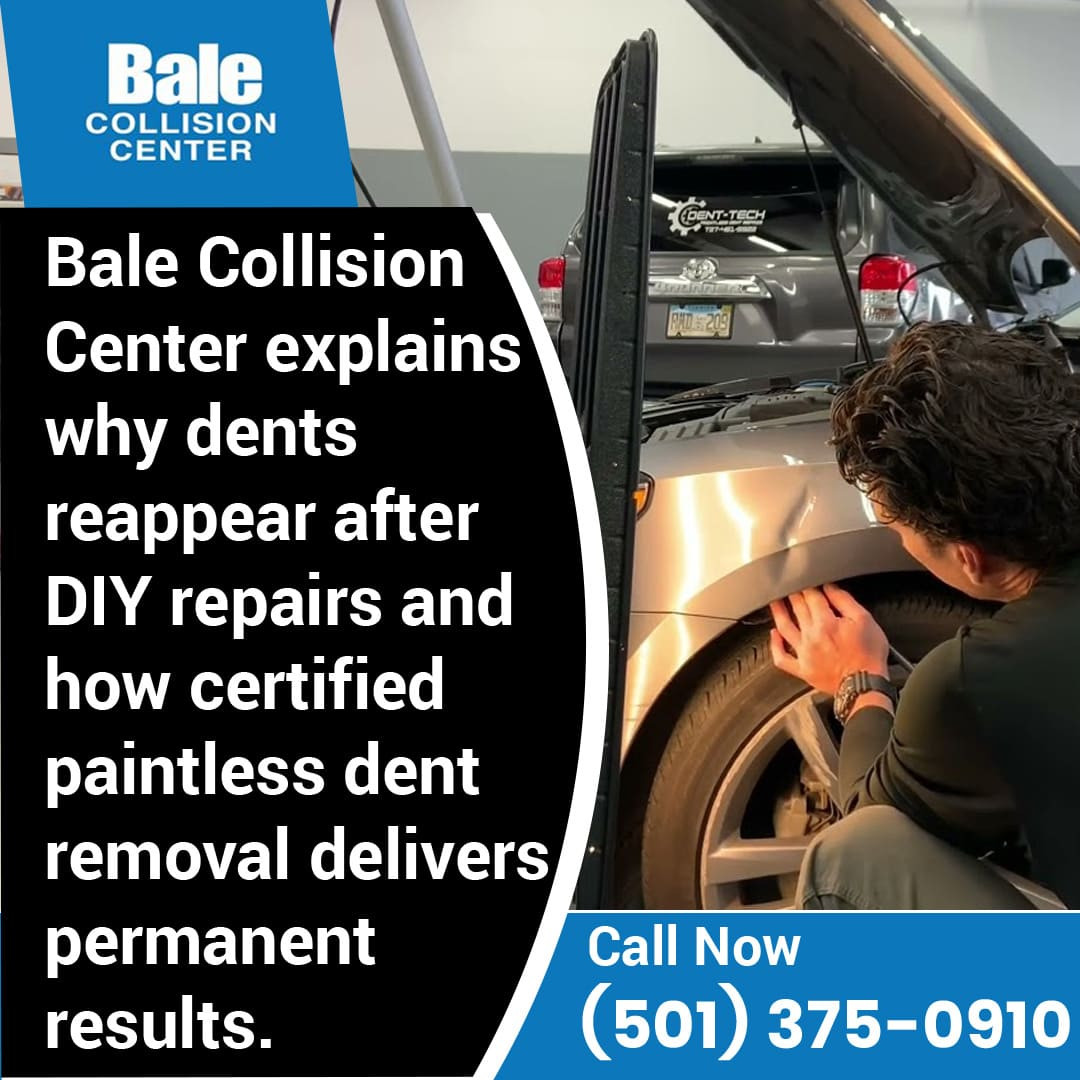
Access to the backside of panels through factory openings allows technicians to apply controlled pressure gradually. This incremental method respects metal properties and redistributes stresses so the material returns to its original shape without creating new weaknesses.
Paintless dent repair (PDR) is a non-invasive method that reshapes metal without sanding, fillers, or repainting. It preserves the factory paint finish by using controlled, gradual techniques that avoid cracking or weakening the surface. This process maintains the protective coating, prevents corrosion, and ensures the dent does not return.
Factors That Influence Repair Success
Timing matters. Fresh dents are easier to correct before the metal stabilizes into a deformed state. Prompt professional evaluation increases the likelihood of permanent repair with minimal risk of long‑term distortion.
Location matters too. Horizontal panels, such as roofs and hoods, experience greater environmental stress from temperature variation and moisture. Panels near reinforcement points or frequently flexed areas require expert technique to prevent recurrence.
Certified technicians evaluate material type, dent depth, paint condition, access points, and stress patterns before choosing the appropriate repair method. This detailed assessment protects customers from inadequate fixes that fail over time.
Bale Collision Center’s Certified Approach in Downtown Little Rock
With 72 years of serving Arkansas families, Bale Collision Center combines advanced equipment with certified training to deliver lasting dent repair results. The facility follows OEM procedures for all work performed, maintaining vehicle specifications throughout the process.
Damage documentation identifies all affected areas, not just visible dents. Hidden stress concentrations and secondary deformations are located and corrected. After repair, precision inspection verifies panel contours and paint condition under multiple lighting conditions.
Bale Collision Center provides certified PDR in Downtown Little Rock, Arkansas, that permanently corrects dent damage. Their professional dent removal approach restores panel integrity and appearance while withstanding temperature fluctuations, road stress, and daily vehicle use.

Get a Professional Dent Evaluation Today
Temporary fixes may seem appealing, but they can lead to recurring damage and higher long‑term costs. Professional dent repair services correct underlying deformation and preserve both appearance and integrity.
For certified dent evaluation and lasting repair, contact Bale Collision Center at (501) 375‑0910 or email bccdowntown@baleautomotive.com. Let the experienced team offer a detailed assessment and repair plan you can trust.
Contact Information:
Bale Collision Center (Downtown)
100 N Cross Street
Little Rock, AR 72201
United States
Jason Spiller
(501) 375-0910
https://balecollision.com/
Original Source: https://balecollision.com/paintless-dent-repair/what-causes-dents-to-pop-back-out-and-why-its-a-problem-bale-collision-center-explains/