
How Snow and Ice Accidents Trigger Hidden Collision Damage
North Hampton, United States - February 26, 2026 / Committed Collision & Auto Body Center /
North Hampton, NH - Winter driving conditions along New Hampshire’s seacoast frequently lead to collisions that appear minor at first glance but result in concealed damage beneath vehicle surfaces. Snow-covered roads, black ice, and reduced traction change how vehicles absorb impact forces, often leaving structural and mechanical problems hidden behind bumper covers, body panels, and underbody shielding.
Committed Collision & Auto Body Center in North Hampton reports that many vehicles arriving after winter accidents show limited exterior damage, yet detailed inspections uncover compromised frame members, altered suspension geometry, and misaligned safety systems. These findings highlight why post-winter accident evaluations require more than surface-level assessments and why auto collision repair must account for winter-specific force behavior.

Winter Collisions Create Different Damage Patterns
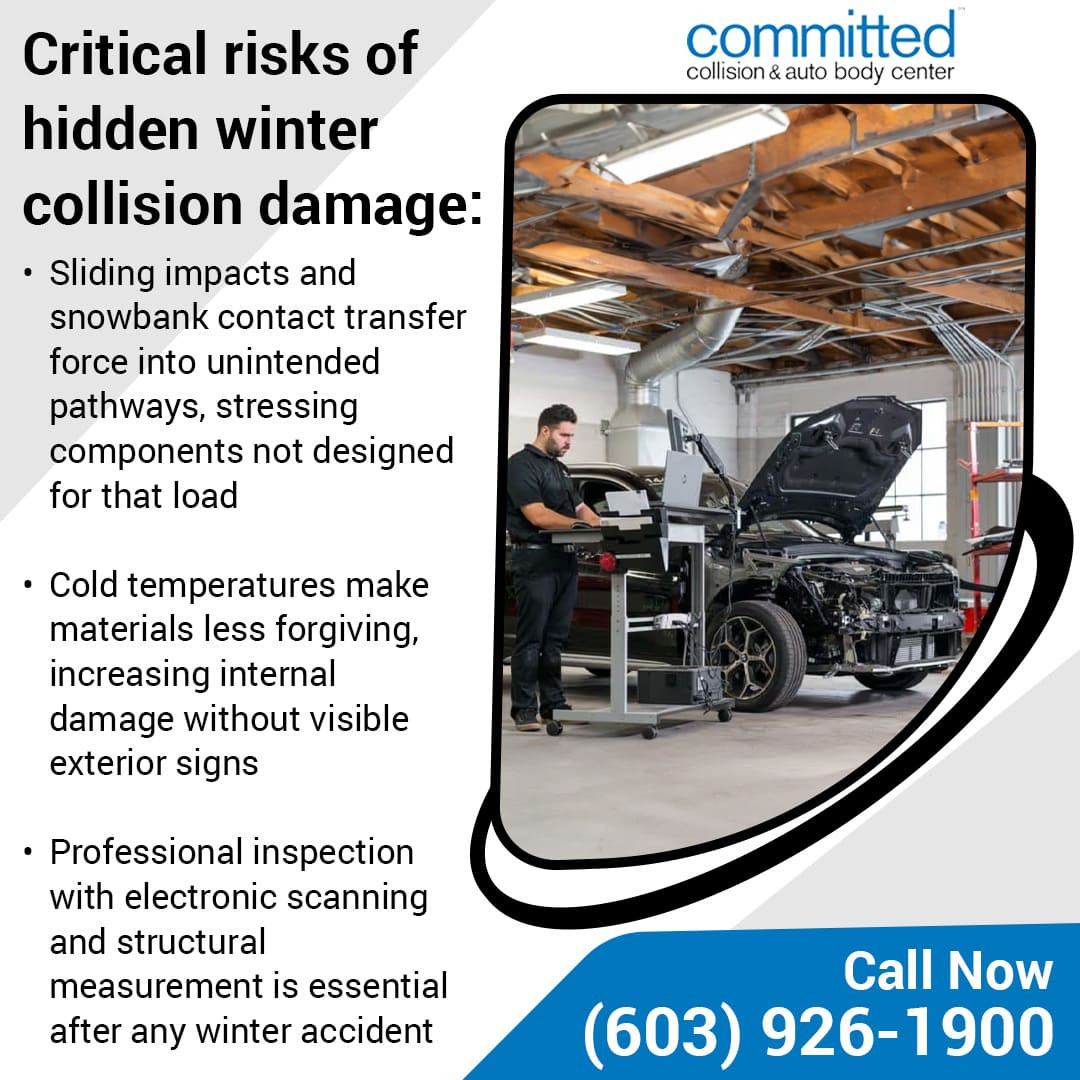
Unlike dry-road crashes, winter accidents often involve sliding impacts and angled contact rather than direct force transfer. Ice and snow reduce friction, preventing controlled stopping. As vehicles continue moving after initial contact, energy travels through unintended pathways, stressing components not designed to absorb that type of load.
Cold temperatures also influence vehicle materials. Metal becomes less forgiving, while rubber components lose flexibility. These conditions affect how energy is absorbed and dispersed during a crash, increasing the likelihood of internal damage without visible exterior signs. For this reason, winter crashes require evaluation by a qualified collision repair specialist car collision repair shop familiar with these impact patterns.
Accident Scenarios That Commonly Hide Damage
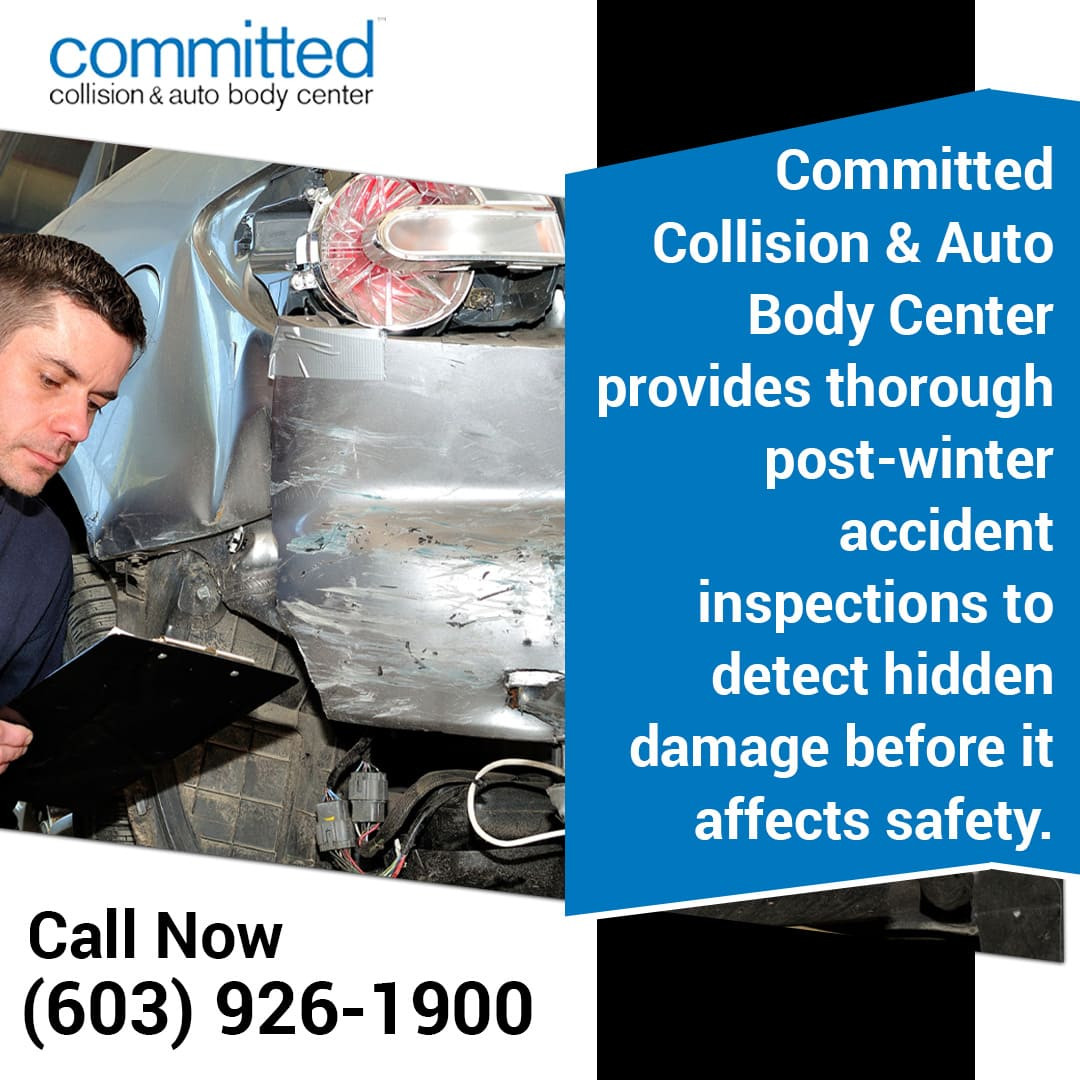
Low-speed sliding incidents are among the most misunderstood winter accidents. Even at modest speeds, the lack of traction forces energy into frame rails, suspension mounting points, and firewall structures. This damage often remains undetected without precision measuring tools.
Snowbank and curb contact present another concern. Packed snow can conceal rigid obstacles such as curbs or frozen ground. When wheels or suspension components strike these hidden objects, force transfers directly into steering and suspension systems. Because snow masks the true point of contact, identifying damage requires lifting the vehicle and inspecting the undercarriage.
Many winter crashes also involve more than one impact. A vehicle may contact another car, slide into a barrier, and then strike a snowbank. Each contact adds stress to energy-absorbing structures. Secondary impacts frequently cause more internal damage than the initial collision, especially when structural components have already absorbed force.
Structural and Safety Systems at Risk
Post-winter inspections often reveal subtle frame shifts, partial crumple zone deformation, and altered suspension alignment. These changes may not immediately affect drivability, but can reduce protection in future accidents.
Advanced safety systems are also vulnerable. Cameras and radar sensors used for collision warnings and braking assistance rely on precise positioning. Minor winter impacts can shift these components without cracking exterior panels, leading to inaccurate system operation if not properly calibrated.
Why Visual Inspections Are Not Enough
Surface inspections alone cannot reveal damage hidden behind bumper covers, floor panels, and underbody protection. Winter debris, such as packed snow, ice, and road salt, further conceals affected areas. Controlled disassembly, electronic scanning, and structural measurement are necessary to document the full extent of damage and confirm proper repair.
Collision repair specialists note that vehicles repaired without addressing hidden winter damage may experience accelerated wear, corrosion, and reduced safety performance over time.
Long-Term Safety Depends on Proper Repair
Unrepaired winter damage can worsen as vehicles return to daily use. Cracked coatings expose metal to road salt, accelerating corrosion. Small structural shifts create ongoing stress, increasing the risk of component failure. These factors make professional auto collision repair in North Hampton, NH, especially important after winter accidents.
Facilities equipped to perform body collision repair using manufacturer procedures, measurement systems, and post-repair verification help restore vehicle safety and performance. When evaluating a car collision repair shop, drivers are encouraged to look beyond cosmetic fixes and prioritize thorough inspection and documentation.

Car Collision Shops Detect Hidden Damage After Winter Collisions
Winter collisions often hide damage that affects safety long after the accident. Drivers are urged to schedule a professional inspection promptly after any snow or ice crash. Are you looking for the best collision repair shop in North Hampton, NH? Contact Committed Collision & Auto Body Center at (603) 926-1900 or info@committedcollision.com. Get your vehicle evaluated, documented, and repaired correctly before hidden damage leads to greater risk.
About Committed Collision & Auto Body Center
This is a family-owned collision repair facility located in North Hampton, New Hampshire. Serving the seacoast community for more than 20 years, the shop provides collision repair services focused on structural accuracy, system verification, and manufacturer-based repair procedures for late-model vehicles.

Contact Information:
Committed Collision & Auto Body Center
203 Lafayette Road
North Hampton, NH 03862
United States
Derek Lighthall
(603) 926-1900
https://committedcollision.com/
Original Source: https://committedcollision.com/collision-repair/how-snow-and-ice-accidents-trigger-hidden-collision-damage/